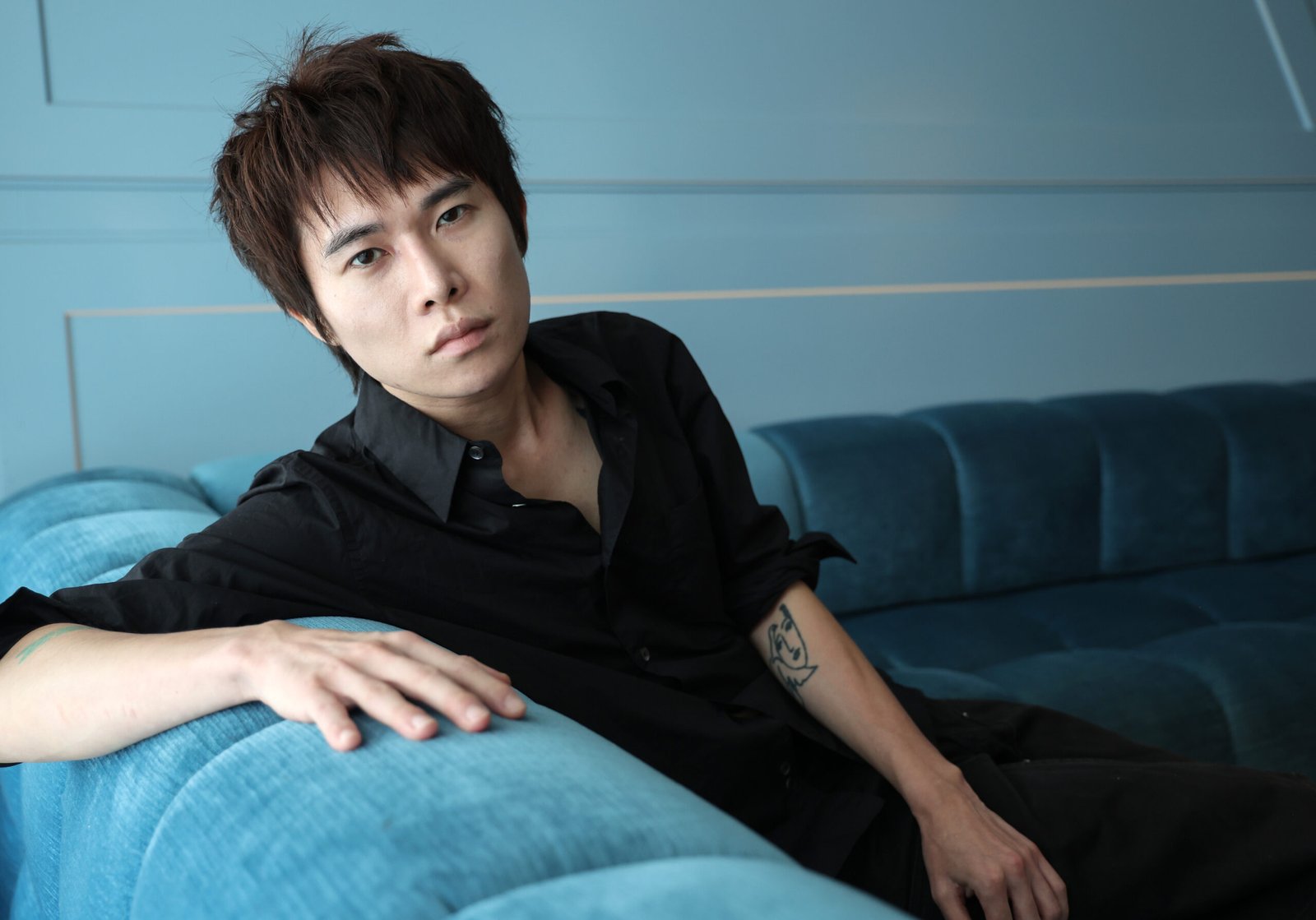
In an exclusive interview with Cinephile Tourist at the BFI London Film Festival, South Korean filmmaker Mokya Shin discusses leaving journalism to document the life of a pioneering transgender performer, the challenges of preserving overlooked histories, and the unexpected response from a younger generation.
For decades, the experiences of South Korea’s transgender pioneers have been largely absent from the country’s documented history. Now, filmmaker Mokya Shin is bringing one of those lives to the screen in his debut feature, Easter.
Blending documentary observation with staged sequences and Buddhist mythology, the film follows Saekja, a pioneering transgender performer who was part of Seoul’s nightlife scene during the 1980s. Through her memories of love, friendship and discrimination, Shin explores a chapter of South Korean history rarely told from the perspective of those who lived it. For the director, telling her story meant leaving behind a six-year career in broadcast journalism, where he had grown frustrated with the medium’s limitations and his inability to protect the people whose lives he documented.
“Because I was part of a broadcasting corporation, I was really an entity of them,” Shin explains during an exclusive interview with Cinephile Tourist at the 2026 BFI London Film Festival. “So, in order to protect my protagonist and characters, I couldn’t really do that, because I was behind a broadcasting corporation.”
Determined to take greater responsibility for how his subjects were represented, he turned to independent filmmaking, although the transition brought its own challenges. “It was a little bit hard,” he admits, reflecting on the difficulties of securing financing and assembling a crew. “It was really challenging for me to start making a film.”
Despite those challenges, he persevered, and his background includes work as a video journalist and creative producer at Vice Media APAC, while his earlier documentary projects include Archiving Men (2023) and Footprints of an Invisible Man Walking on Sand (2024). With Easter, the idea emerged from his growing awareness of the discrimination faced by transgender people in South Korea and the scarcity of historical footage documenting older generations of the community.
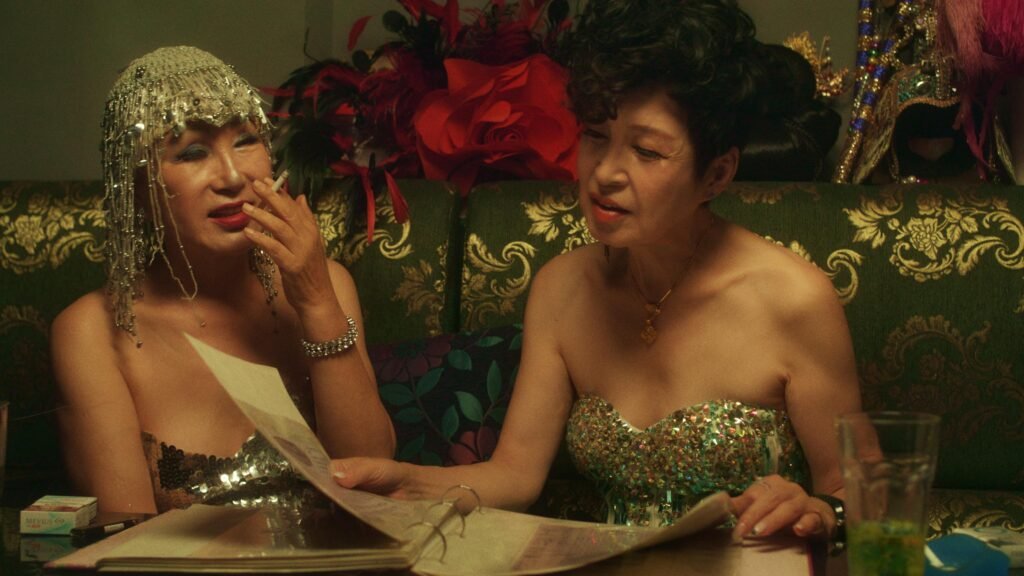
During his research, he met Saekja, whose experiences stretched back to the early years of Seoul’s transgender nightlife scene. Associated with one of the city’s earliest transgender clubs, she belonged to a community that found opportunities for performance and self-expression in spaces often removed from mainstream society. Her recollections form the foundation of Easter, in which Saekja revisits her past through old photographs and conversations with another woman, reflecting on the relationships and experiences that shaped her life.
Alongside her story, Shin introduces a young male character, played by Lim Jin-hyo, who serves as a companion and an alter ego for the filmmaker himself. Moving through abandoned spaces and theatrical performances, the character connects different generations as the film shifts between memory, reality and fiction.
One of the moments that stayed with Shin most strongly during production was an intimate drinking scene between Saekja and another older woman, whose conversation gradually turns towards deeply personal subjects. “The truth comes out of it,” he recalls. “The truth is just slowly dripping out into drinking.”
Their discussion touches on death and samsara, the Buddhist concept of the cycle of birth, death and rebirth. Shin was particularly struck by Saekja’s reflections on reincarnation, which she described as a unique experience that offered a deeper understanding of what she had lived through. These spiritual themes are woven throughout the film, with its unconventional narrative moving between Saekja’s recollections and more theatrical imagery. The possibility of rebirth adds another dimension to a story concerned with aging, memory and the passage of time.
While Easter revisits the past, Shin is equally interested in how attitudes towards transgender people have evolved in South Korea. “There wasn’t the word ‘transgender’ in the 1980s and 1990s,” he says. “They just call them homosexual.”
He believes public understanding has improved over the decades, particularly as LGBTQ+ entertainers and online personalities have become more visible. However, he acknowledges that discrimination remains widespread. “Now, society has changed a little but .. slowly.”
Although the documentary is rooted in South Korean culture, its reception overseas has shown that Saekja’s experiences resonate with audiences far removed from her circumstances.
Easter had its world premiere at FIDMarseille in France in July 2026, receiving a Special Mention from the First Film Competition jury and winning the festival’s High School Award, selected by a student jury.
The latter recognition came as a particular surprise to Shin, who hadn’t anticipated such an enthusiastic response from teenagers to a film centred on an older transgender woman. “For them to understand the film, and to give an award for it, was just such a surprise,” he says. The response was especially meaningful given the generational and cultural differences between the young French audience and the woman whose life he had spent years documenting.
Following its premiere in France, Easter continued its international festival journey with a screening at the BFI London Film Festival, introducing Saekja’s story to another audience.
Shin is now looking ahead to the possibility of a South Korean release in 2027, where he hopes the film will encourage viewers to look beyond the labels often attached to transgender people. “My hope for the film is that in Korea, people view transgender people as just transgender, and that’s it; they’re put into a category, into a box, as just transgender, and nothing else.”
Rather than defining Saekja solely by her gender identity, he wants audiences to appreciate the full complexity of her experiences, from her relationships and personal struggles to the memories she has carried throughout her life. “What I hope is that people actually understand this is about a person, and it’s a story about a person.”
It’s a message that reflects the motivation behind Shin’s departure from journalism: the desire to tell stories on his own terms while giving the people at their centre the space to be understood beyond a single defining characteristic.
Easter, written and directed by Mokya Shin, premiered at FIDMarseille in July 2026 and screened at the 2026 BFI London Film Festival. The Korean-language feature stars Saekja, Lim Jin-hyo and Rosemary, with cinematography by Hyongjoo Lee and music and sound by Youngnam Song. Shin also served as editor, with production credited to Flesh Film House and international representation by Low Light Films.