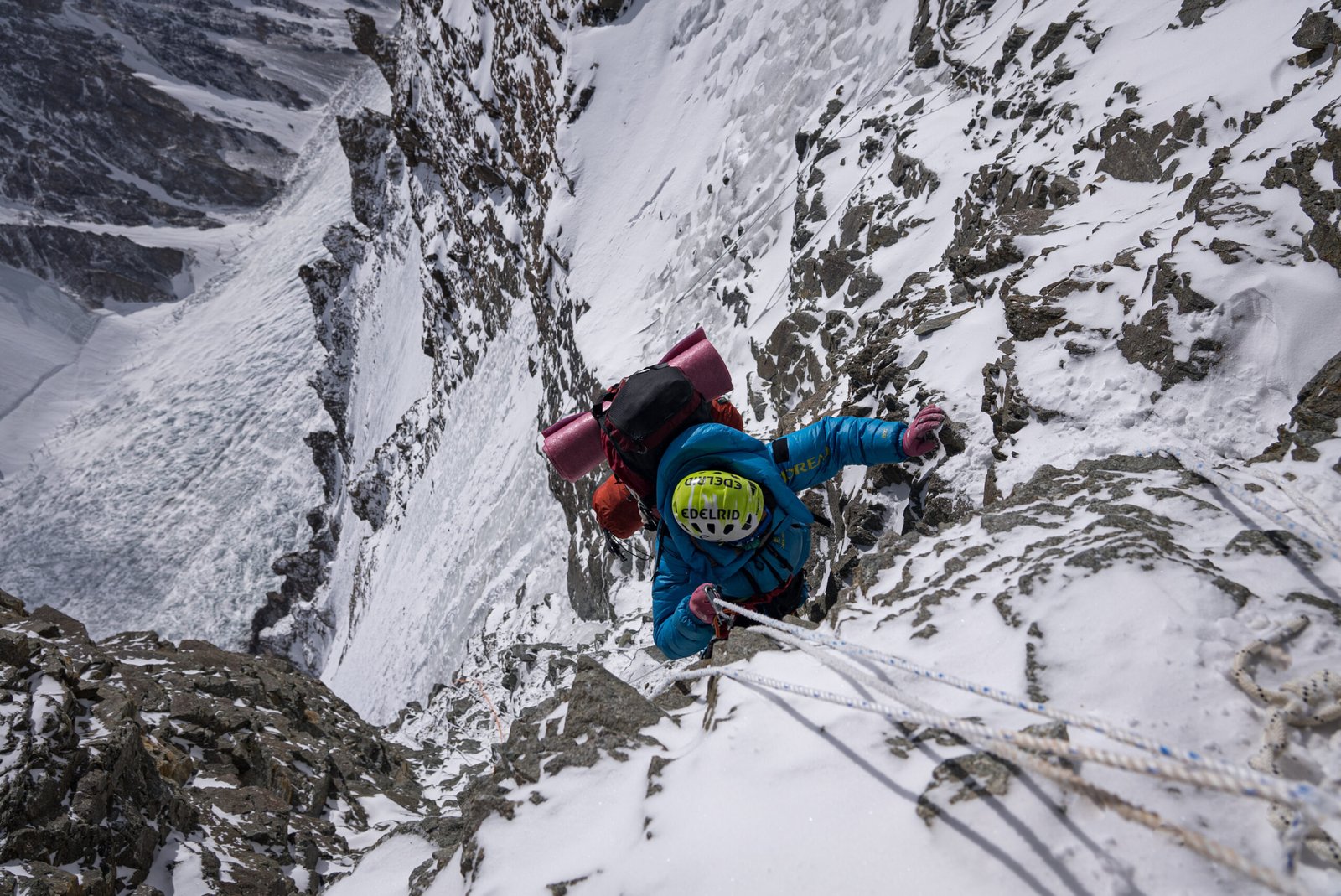
The Last First: Winter K2 is a breathtaking, immersive, and deeply emotional documentary that explores one of mountaineering’s most extraordinary and tragic expeditions, raising uncomfortable questions about ambition, competition, and the pursuit of history.
Directed by acclaimed documentary filmmaker Amir Bar-Lev, Apple TV’s The Last First: Winter K2 examines the events surrounding the historic first winter ascent of K2 in 2021, and the competing ambitions and decisions that shaped the expedition.
As someone who has always been fascinated by mountains, I found the documentary both captivating and, in an unexpected way, educational. I hadn’t fully appreciated just how commercialised high-altitude mountaineering had become, with social media, sponsorships and national pride adding new layers of pressure to an already dangerous pursuit.
The rivalry between expedition teams, particularly the Nepalese climbers’ determination to claim a historic first, revealed a side of mountaineering that I sometimes struggled to comprehend. Yet despite the devastating consequences of that season, I couldn’t view the tragedy in black-and-white terms. There is something profoundly human about the desire to push beyond our limits, to stand somewhere few others have stood and achieve what once seemed impossible. It’s a calling I can understand, even when the risks are almost unimaginable.
Long after watching The Last First: Winter K2, I found myself reflecting on the difficult moral questions it raised, particularly where ambition ends and responsibility begins. I had the opportunity to explore those questions with Bar-Lev for Cinephile Tourist, discussing the growing commercialisation of mountaineering, the significance of the Nepalese team’s historic achievement, the heartbreaking story of Pakistani climber Ali Sadpara, and what the events on K2 might tell us about the future of high-altitude climbing.

• What initially drew you to the 2021 K2 winter expedition, and at what point did you realise this was a story about something much bigger than mountaineering?
I signed on in March 2024, three years after Winter K2, and until then I hadn’t thought much about high-altitude mountaineering at all. What got me first was the question of risk. We live increasingly cossetted lives; chafing against the slumber modern life offers us feels natural and even admirable to me. On the other hand, there is the very real possibility that you don’t come home. Is that a fair trade-off, especially if you are a parent?
• How did you go about piecing together the expedition from existing footage, and what were the biggest challenges in reconstructing what actually happened?
My archive team tracked down many of the roughly sixty people who were there and licensed their footage – expedition documentaries, sponsor reels, phone clips, radio audio. Then we built a cast of interviewees to support that prismatic approach. The hope is that everyone puts their best foot forward, and the audience decides who they side with, on which points, and when. The biggest challenge was deciding that no single perspective should be privileged.
• The documentary paints a fascinating picture of how social media and commercial expeditions have changed mountaineering. Do you think the pursuit of online recognition is fundamentally changing the risks climbers are willing to take?
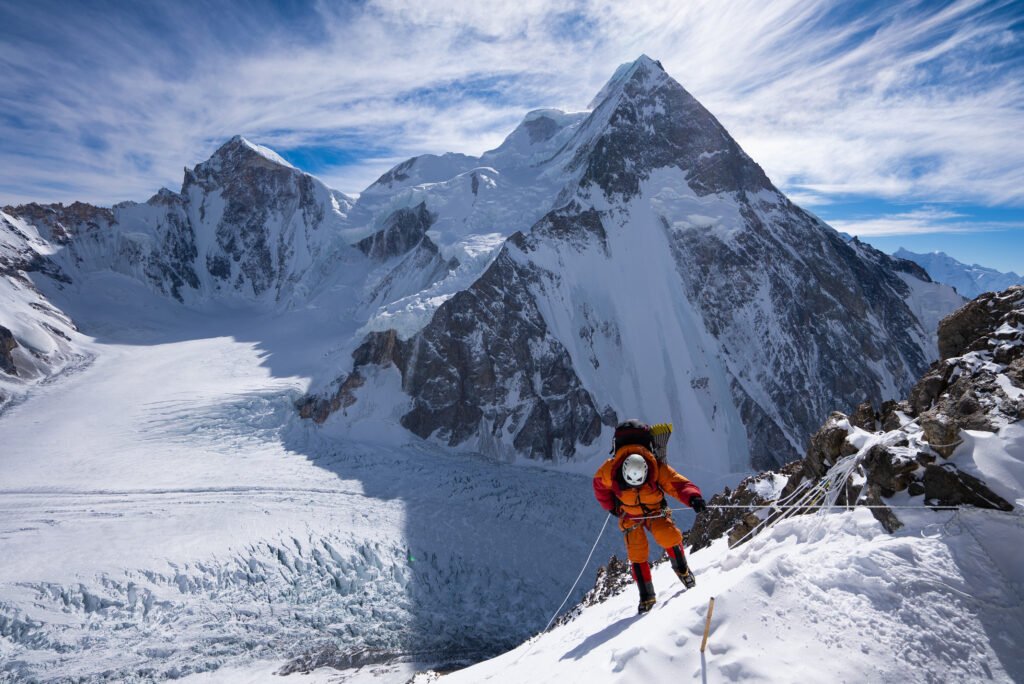
The pursuit of online recognition is a new factor, of course, but I’d be careful about making it the only factor in the K2 tragedy. We’ve been telling stories about our feats since the beginning of time. All that social media has changed is the delivery system. And the credit has never been distributed evenly. Ten Nepali climbers stood on that summit together, and the world mostly remembers one name. Mountaineering is a deeply cooperative endeavor, but our society values individuals as celebrities.
• One of the most compelling elements is the Nepalese team’s determination to make history on their own terms, rather than helping Western climbers claim another first. How important was that reversal of the traditional mountaineering hierarchy to the story you wanted to tell?
The Nepalese determination to upend the traditional mountaineering hierarchy was integral to the story we wanted to tell: That the history of this sport cast Sherpas, and more recently the Balti of Pakistan, as adjuncts: porters, rope-fixers, guides – handmaidens to the glory of climbers who were usually white and Western and who ended up holding the records. In the winter of 2020, a group of Nepali climbers decided they were no longer going to play second fiddle. Ten of them reached that summit together. Whatever you conclude about the decisions taken up there, that moment is a genuine rupture in a century-old arrangement, and I wanted the film to register it as such rather than treat those men as supporting characters in somebody else’s story. That’s the secondary meaning of “The Last First.”
• As someone of Pakistani heritage, I found Ali Sadpara’s story particularly moving, especially the significance of his ambitions for Pakistan. How did you approach telling his story alongside the competing ambitions and commercial interests on the mountain?
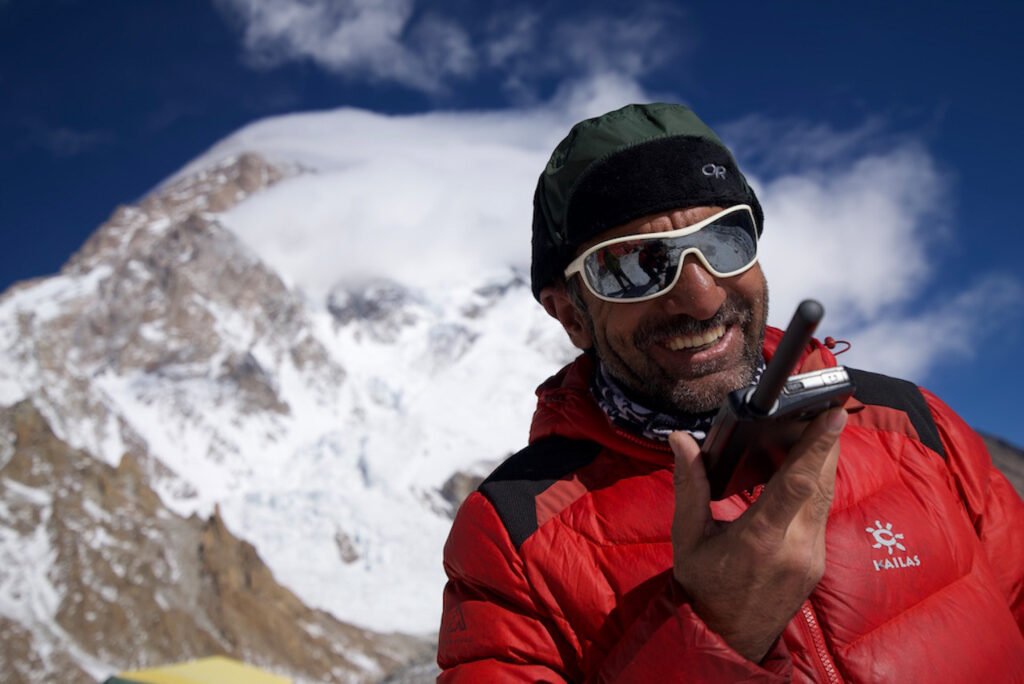
Ali is in many ways the movie’s heart and conscience. He was the most beloved mountaineer in the base camp, kind of the “common denominator” for all the different factions. And he really didn’t want to engage in the competition that developed on K2. But the pressure on him to succeed, mainly brought on by the vague notion that he could be to Pakistan what Nims was to Nepal, ultimately impacted the quality of his decision-making.
With Snorri and Sadpara, you had two men from opposite ends of the economic world, genuinely fond of each other, with an unresolved question underneath: who ultimately called the shots? The expert winter climber, or the man paying for the expedition? There’s a paradox I kept circling – an undertaking like this arguably demands a strict, almost military pecking order, and their friendship may have made that impossible.
• The confusion over overcrowded tents and competing expedition teams is quite alarming. Having examined so many different perspectives, did you come away believing that anyone bore responsibility for what happened, or that it was a tragedy that no one person could have prevented?
What makes this story so compelling is the “perfect storm” of contributing factors to the tragedy: The death of Sergi Mingote in a fall, and the fact that the season carried on regardless. The sheer number of cameras present, which raised the cost of turning around. And yes, when the Nepalese took the gloves off and acted more competitive than collaborative, they were breaking a rule that had never worked in their favour. One of them put it to Angela Benavides of ExplorersWeb this way: in a football World Cup you always want your country to take the trophy, and the coach keeps the strategy secret. Nationalism was on every side – Pakistan wanted its own man up there too. But ultimately, competition is a poor organising principle for an environment where cooperation is what keeps people alive.
• The film raises uncomfortable questions about ambition, mortality and the families climbers leave behind. Did making this documentary change how you personally view the pursuit of extraordinary achievements when the potential cost is so high?
I dislike a lot of mountaineering films; plenty of them strike me as manipulative and on shaky ethical ground, hagiographic about death-defying acts. I wanted to look at this world from a sea-level perspective. If someone walks out of it saying these people are crazy, I don’t think they got the film. I’m not against risk. Taking risks is a deeply human act. The question the film asks isn’t whether they should have gone. It’s what the rest of us have to do with why they went.
• After spending so much time immersed in this story, what do you hope audiences take away about the future of high-altitude mountaineering and the people whose contributions have historically been overlooked?
I construct these films so that there can be several takeaways, and conflicting reviews are my favourite kind. But I’ll say what I hope it isn’t. If you come out saying those people are crazy, I don’t think you got the film. If you come out without feeling it as a tragedy, you missed it too. Where I landed personally is close to the old line: we have seen the enemy, and it is us. For all its alien setting, this is a story about civilization in the present moment, with all its pluck and all its shortcomings.
The Last First: Winter K2 is available to watch on Apple TV.