
As Alpine hiking finds a new audience on social media, French filmmaker Manon Coubia reflects on a decade spent working in a remote mountain refuge, the changing attitudes towards women exploring alone and how her experiences inspired her award-winning debut feature, Forest High.
The French Alps have long attracted those seeking adventure, solitude and an escape from everyday life. But as images of dramatic mountain trails, remote refuges and hut-to-hut hiking adventures circulate across social media, a new generation of outdoor enthusiasts is discovering the appeal of life at altitude. For filmmaker Manon Coubia, however, the mountains are far more than an idyllic destination. They’re home, a workplace and an enduring source of creative inspiration.
Having spent a decade working seasonally as a mountain refuge keeper in the French Alps, Coubia has witnessed changes in the people who venture into the mountains, particularly women choosing to explore independently. During an exclusive interview with Cinephile Tourist at the 2026 BFI London Film Festival, the director reflected on the growing visibility of solo female hikers and how attitudes have shifted over the years.
“Ten years ago, it was strange,” she says of women hiking alone. “Because women were afraid to go alone, and now it’s okay.” While Coubia doesn’t directly attribute that shift to social media, her observations speak to a broader cultural moment in which solo travel, hiking and outdoor independence have become increasingly visible online.
It’s a subject that feels particularly relevant to her debut feature, Forest High (Forêt Ivre), a quietly contemplative drama about three women who independently take charge of a remote Alpine refuge across different seasons. But Forest High‘s origins lie not in a passing fascination with the wilderness, but in Coubia’s own extraordinary relationship with the mountains.
Long before bringing a film crew into the mountains, Coubia had been living and working in the very environment she would eventually bring to the screen. “I’m working as a director. But also, during the summer, as a refuge keeper.” After 10 years of seasonal work, she had accumulated a wealth of encounters and experiences that she felt deserved to be made into a film. “I collected many stories in this place, and one day, it was time for me to make a film to celebrate this place.”
The result is Forest High, a Belgium-France co-production via The Blue Raincoat & Aurora Films that follows three women, Anne, Hélène and Suzanne, as they take turns tending a mountain hut in the northern French Alps. Rather than sharing a conventional interconnected storyline, the women occupy the same refuge at different times, their experiences linked by the landscape, the passing seasons and the people who arrive at its door.
Played by Salomé Richard, Aurélia Petit and Anne Coesens respectively, the three protagonists each encounter a different relationship with solitude, responsibility and the natural world. The refuge itself becomes the connecting thread, a place where strangers briefly cross paths before returning to their lives elsewhere. It’s an environment Coubia understands intimately. Although she now lives in Belgium, her attachment to the French Alps remains central to her work. “You know, I was born here. It’s really my first territory,” she says.
Born in Thonon-les-Bains, in France’s Haute-Savoie region, Coubia has repeatedly returned to the landscapes of her childhood throughout her filmmaking career. Her previous work includes The Fullness of Time, which received the Golden Leopard for best international short film at Locarno in 2016, as well as Tide (2019) and Full Night (2023).
With Forest High, her first feature-length fiction film, she continues that exploration on a larger scale, examining how a familiar landscape can hold different meanings for the people who inhabit it.
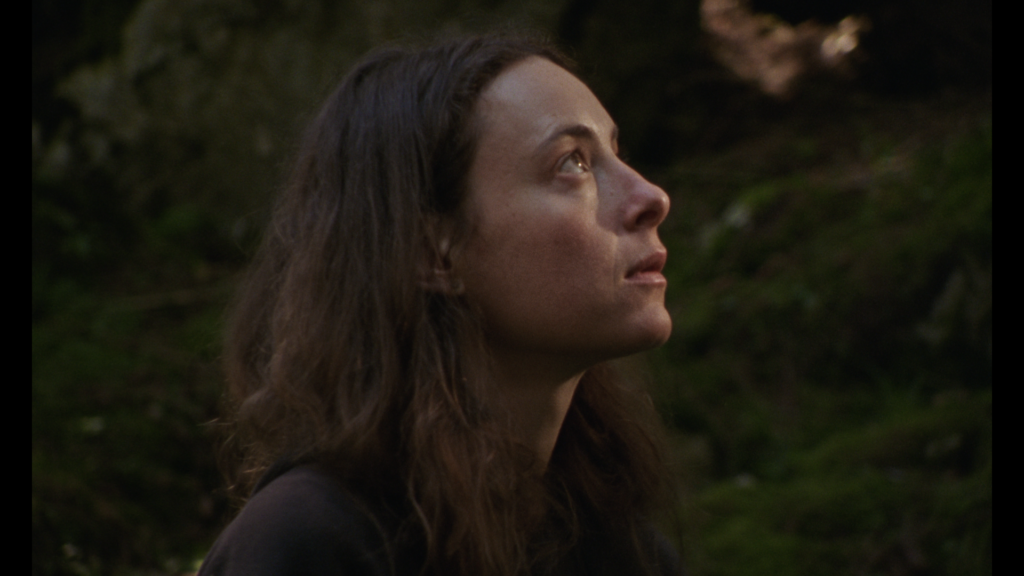
One of the most striking aspects of mountain refuge life is how dramatically it changes with the seasons. During summer, Alpine huts can become busy meeting points for hikers, climbers and travelers making their way through the mountains. But when winter arrives, the same places can become almost entirely deserted. “It’s quite different, because there is nobody… maybe one person per week,” Coubia explains of the quieter months. “And so you are very isolated.”
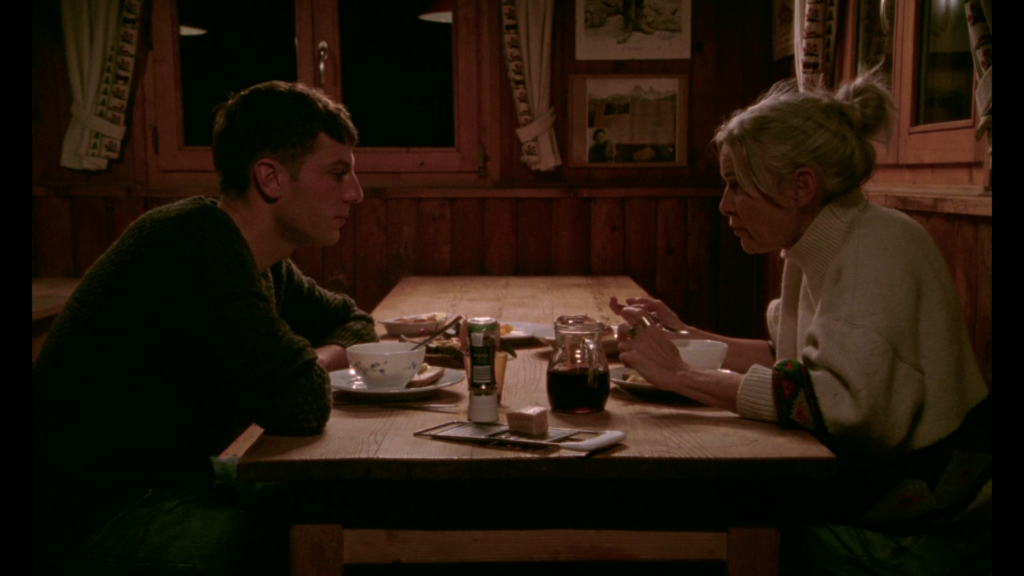
That contrast provides the foundation for Forest High, which unfolds across three seasonal stories. In spring, Anna, played by Salomé Richard, approaches the end of her time as refuge keeper and encounters Antoine, a birdwatcher searching for the elusive capercaillie. During the busier summer season, Aurélia Petit’s Hélène takes over, managing the practical demands of welcoming visitors and maintaining the refuge. By winter, Anne Coesens’ Suzanne finds herself in an altogether quieter environment, where an encounter with a French soldier, played by Yoann Zimmer, interrupts her isolation.
For Coubia, the near-empty winter landscape creates a different kind of intimacy. With few people around and limited places to go, an unexpected encounter can take on a particular significance. The director was interested in what happens when two people find themselves sharing such a remote environment, away from the distractions and routines of ordinary life.
To capture that environment authentically, Coubia and her crew embraced many of the same conditions the characters experienced.
“During the shooting, we were living there without electricity and without showers,” she recalls. The director explains that the crew lived in the same spirit as the refuge itself, rather than simply arriving each day to film and returning to more comfortable accommodation. The production unfolded over two years, with Coubia returning to capture the changing seasons.
“We’re shooting over two years,” she says, describing five separate filming periods shaped by seasonal differences. Shot on 16mm film, Forest High combines carefully constructed fiction with moments of unexpected spontaneity. And one of the most unusual aspects of the production was that the refuge didn’t simply close its doors for filming. During the summer, it remained operational, meaning genuine visitors could arrive while cameras were rolling. “We accept that sometimes during the shooting, people arrive,” Coubia explains. “And we include them.”
For a story concerned with the unpredictable encounters that define life in a refuge, the arrival of real hikers offered something that couldn’t be recreated through a scripted scene.
The decision also reflects the film’s unusual position between fiction and documentary, with Coubia drawing on her own lived experiences while allowing the environment to shape what happened during production.
The film’s focus on three independent women also connects with changes Coubia has observed during her decade working in the mountains. As hiking and hut-to-hut adventures become increasingly prominent on social media, conversations about women traveling alone have gained greater visibility.
Asked whether she had noticed a difference in the people exploring the Alps, particularly younger visitors and solo female hikers, Coubia pointed to the changing attitudes towards women venturing into the mountains independently. For her, one of the most noticeable shifts is that solo female hiking no longer attracts the same sense of surprise it once did. It’s a development that resonates with Forest High, where the central characters are comfortable inhabiting a landscape that might traditionally be associated with danger, isolation or physical endurance.
Yet Coubia doesn’t present the mountains simply as somewhere to conquer. Instead, her characters find meaning in everyday routines: preparing the refuge, welcoming strangers, navigating the weather and experiencing the passing of time. For the director herself, working in this environment has also provided an escape from the professional world of filmmaking. As she explains, the mountains allow her to encounter people she might never meet in her usual working life.
For all its dramatic Alpine scenery, Forest High is ultimately concerned with something less tangible: the possibility of living differently. Coubia says one of the most gratifying responses has come from younger viewers, some of whom have approached her after screenings to describe how the film made them feel.
“It’s funny, because, most of the time, all the youngest people have told me after a screening, ‘Okay, I feel good now.'” She believes that response reflects a wider desire to escape the relentless pace of contemporary life. “I think it’s because we need to take this kind of time now. Everything is so fast.”
For Coubia, the mountains are also connected to ideas of resistance, including the history of resistance during the Second World War. It’s a theme she believes deserves renewed consideration today, alongside the possibility of organising life differently and creating opportunities for meaningful encounters.
In the refuge, people who might otherwise never cross paths can find themselves sharing the same space, temporarily removed from the expectations and routines of everyday society. That sense of connection has stayed with audiences, she says, including viewers who leave the film wanting to seek out similar experiences for themselves. For a filmmaker whose relationship with the Alps stretches back to childhood, the response brings her work full circle. What began as a decade of summers spent working in a mountain refuge has become a cinematic reflection on independence, community and the freedom to step away from the world below.
And as more women discover the possibilities of exploring the outdoors on their own terms, Forest High offers a reminder that the most rewarding mountain journeys aren’t necessarily about reaching a summit, but about finding somewhere to stay just a little while longer.
Forest High premiered at the 2026 Berlin International Film Festival, where it received a Special Mention in the Perspectives competition. It subsequently won Best Feature Film at the Buenos Aires International Festival of Independent Cinema and screened in the First Feature Competition at the 2026 BFI London Film Festival.